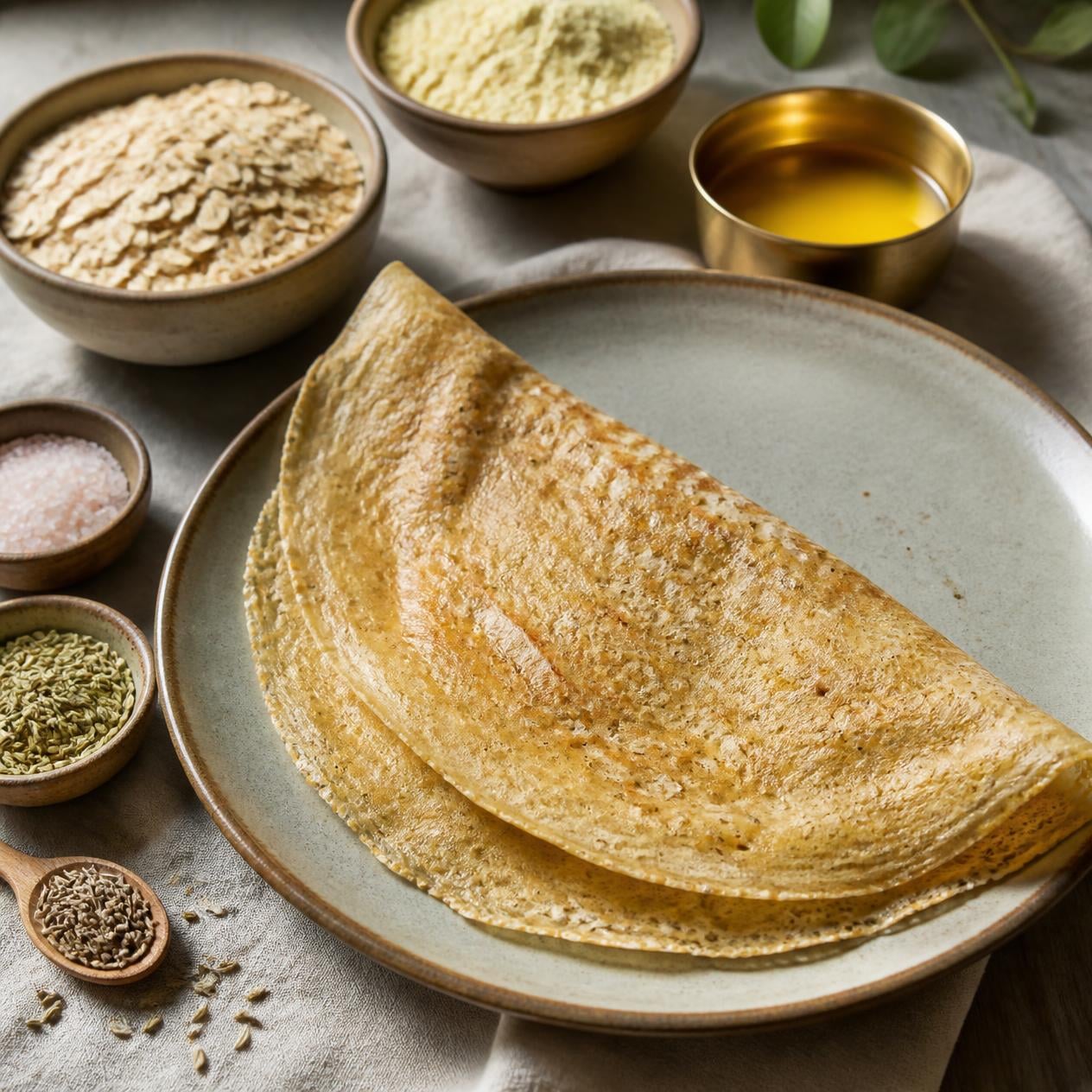
This dosa is designed for the transition from late summer into early fall, when Pitta may still be elevated while Vata is beginning to accumulate. Soaking and thoroughly cooking the oats creates a softer and more digestible preparation, while serving the dosa warm with moist vegetables, saag, soups, or stews helps balance the naturally light and dry qualities of the flours.
Oats provide grounding, nourishing qualities that support Vata and help provide steady energy. Soaking and blending the oats makes them softer and more suitable for digestion during the seasonal transition.
Chickpea Flour provides plant-based protein and adds lightness to the dosa, helping to balance the more grounding qualities of oats. Its naturally dry quality is best balanced through soaking, cooking with ghee, and serving alongside moist foods.
Fennel & Cumin gently support Agni and comfortable digestion. Fennel brings cooling, soothing qualities that help balance Pitta, while cumin provides gentle warmth and supports the digestion of grains and legumes. Together they provide digestive support without excessive heat.
Ghee provides moisture, lubrication, and grounding to balance the dry qualities of the flours. A small amount supports Vata and Ojas while keeping the dosa light enough for the warmer end of summer.
Warm, Moist Accompaniments Serving the dosa alongside soft-cooked vegetables, saag, soups, or stews adds moisture and nourishment. This is particularly helpful as Vata begins to accumulate, preventing the meal from becoming too dry or light.
Dosha Type
V = + / P − / K −
Vata — Pacifying: Soaked oats, warm cooking, ghee, gentle spices, and moist accompaniments provide grounding, warmth, and moisture to balance Vata’s dry and mobile qualities. The dosa is best enjoyed warm rather than cold or very crisp.
Pitta — Pacifying: Fennel provides a cooling quality, while the simple preparation avoids excessive heat and spice. Soaking and cooking the dosa well creates a gentle, nourishing meal appropriate for lingering summer heat.
Kapha — Pacifying: Chickpea flour and the light, thin preparation provide protein and help prevent excessive heaviness. Kapha types can use a smaller amount of ghee and pair the dosa with plenty of lightly spiced vegetables or greens.
Discover your own path
JOIN OUR COMMUNITY
Join our newsletter for insider scoop, information, and additional resources on how you can live your most aligned life.
Live your most aligned life. Subscribe to our FREE newsletter to enjoy the latest Ayurvedic seasonal inspirations and to gain access to exclusive community offers.