INDIVIDUALIZED HEALING THROUGH HOLISTIC WELLBEING.
Step 1: Cook chickpeas
Drain and rinse soaked chickpeas.
Place in a pot with 3 cups water or broth. Bring to boil, reduce heat, and simmer 45–60 min until tender. Skim foam if needed.
Drain chickpeas, reserving a little cooking water.
Step 2: Make hummus
Blend cooked chickpeas, sunflower oil, lemon juice, cumin, turmeric, ginger, black pepper, and salt in a food processor.
Add warm water gradually until creamy. Taste and adjust lemon, salt, or spices.
Sprinkle with paprika and garnish with cilantro.
Step 3: Steam vegetables
Steam chosen vegetables until just tender-crisp (3–5 min).
Optional: Toss with ½ tsp ghee and a pinch of salt.
Step 4: Serve
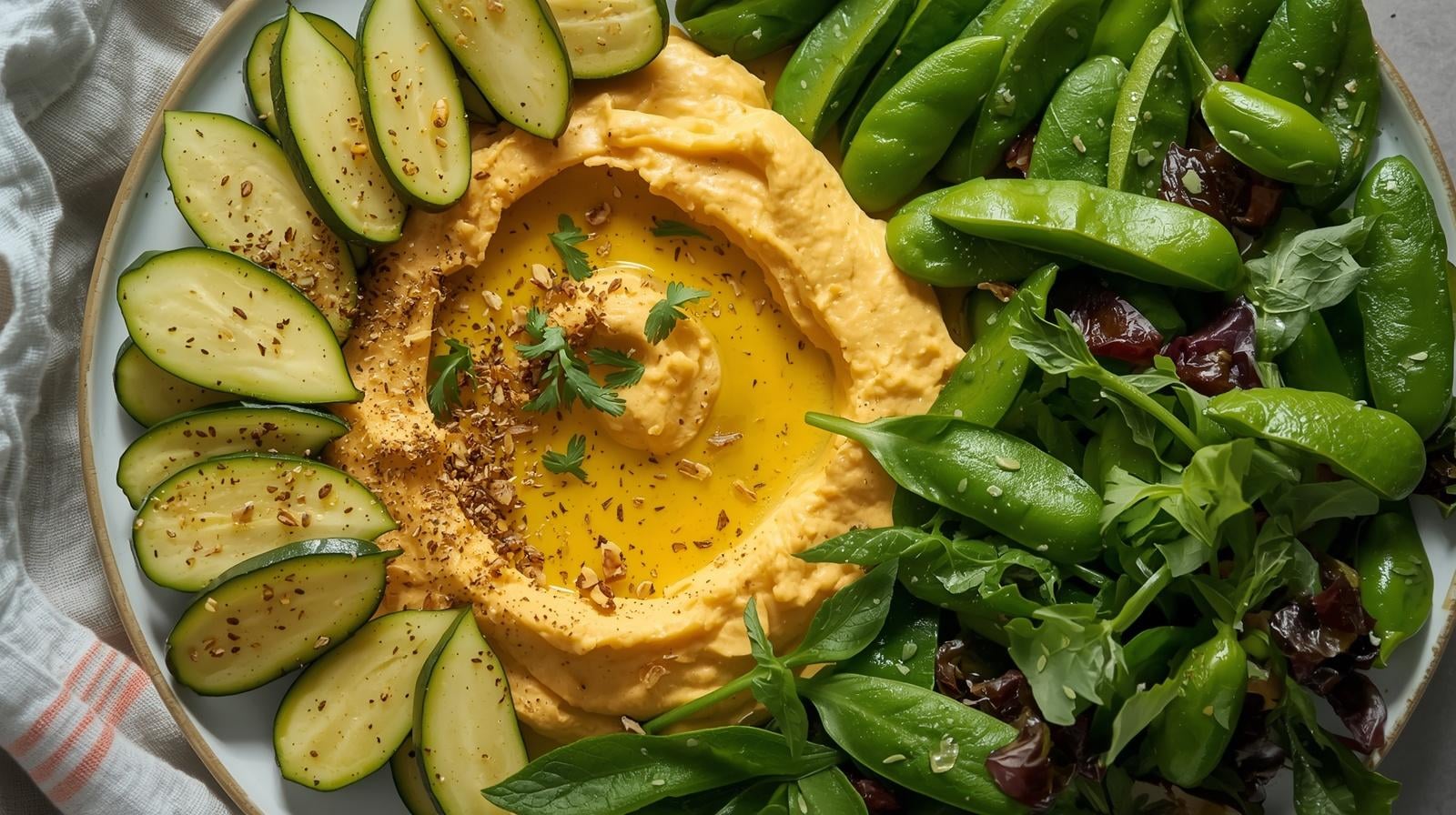
Plate a scoop of hummus alongside the steamed vegetables.
Garnish with fresh herbs. Enjoy as a snack or light meal.
This hummus plate is light, nourishing, and gently cleansing — ideal for early spring, when the body naturally begins to transition out of winter heaviness.
Chickpeas, soaked and cooked from dried, are gentle on digestion and provide steady nourishment without overburdening the system. Their natural astringent taste is particularly balancing for Kapha, helping to reduce excess earth and water elements that tend to accumulate during winter. Optional paprika adds a slightly pungent flavor, which further stimulates digestion and gently mobilizes stagnant Kapha.
The warming spices — cumin, turmeric, ginger, and a touch of black pepper — support circulation, stimulate agni (digestive fire), and reduce Kapha stagnation, making this dish harmonizing for springtime.
Steamed spring vegetables, such as zucchini, snap peas, leafy greens are light, fresh, and mildly detoxifying. Their crisp-tender texture preserves nutrients while supporting gentle liver and digestive cleansing.
A squeeze of lemon at the end brightens the flavors and lightly stimulates digestion, awakening the senses and enhancing the dish’s springtime freshness.
Fresh herbs like cilantro, parsley, or mint add a subtle digestive lift and a refreshing herbal note, completing this simple, nourishing, and seasonally balancing plate.

V-/K-/P+ (in excess)
Vata:
Warm, grounding, and lightly moist — supports Vata during seasonal transitions.
Ghee and gently cooked vegetables counter dryness and lightness.
Adjustment: Add extra ghee or mild warming spices (like coriander or a pinch more ginger) if feeling cold, scattered, or low in energy. Can swap sunflower oil for olive oil.
Pitta:
Light, mildly warming, and easy to digest — balances excess Pitta without overheating.
Carrots, spinach, and lemon provide calming, refreshing energy.
Adjustment: Reduce warming spices (ginger, black pepper, turmeric) slightly and increase greens or a squeeze of lemon for cooling and soothing.
Kapha:
Light, warming, and slightly stimulating — helps clear residual winter heaviness.
Ginger, cumin, and turmeric gently reduce Kapha stagnation without being too harsh.
Adjustment: Emphasize warming spices (extra ginger or cumin), keep ghee minimal, and avoid heavy oils or creamy additions.
Join our newsletter for insider scoop, information, and additional resources on how you can live your most aligned life.
Live your most aligned life. Subscribe to our FREE newsletter to enjoy the latest Ayurvedic seasonal inspirations and to gain access to exclusive community offers.